AI rally lifts tech giants as dominance risks grow
Big Tech extended an AI-led rally into June as buybacks, funding plans and upbeat earnings met rising concerns about concentration risk in US equities.
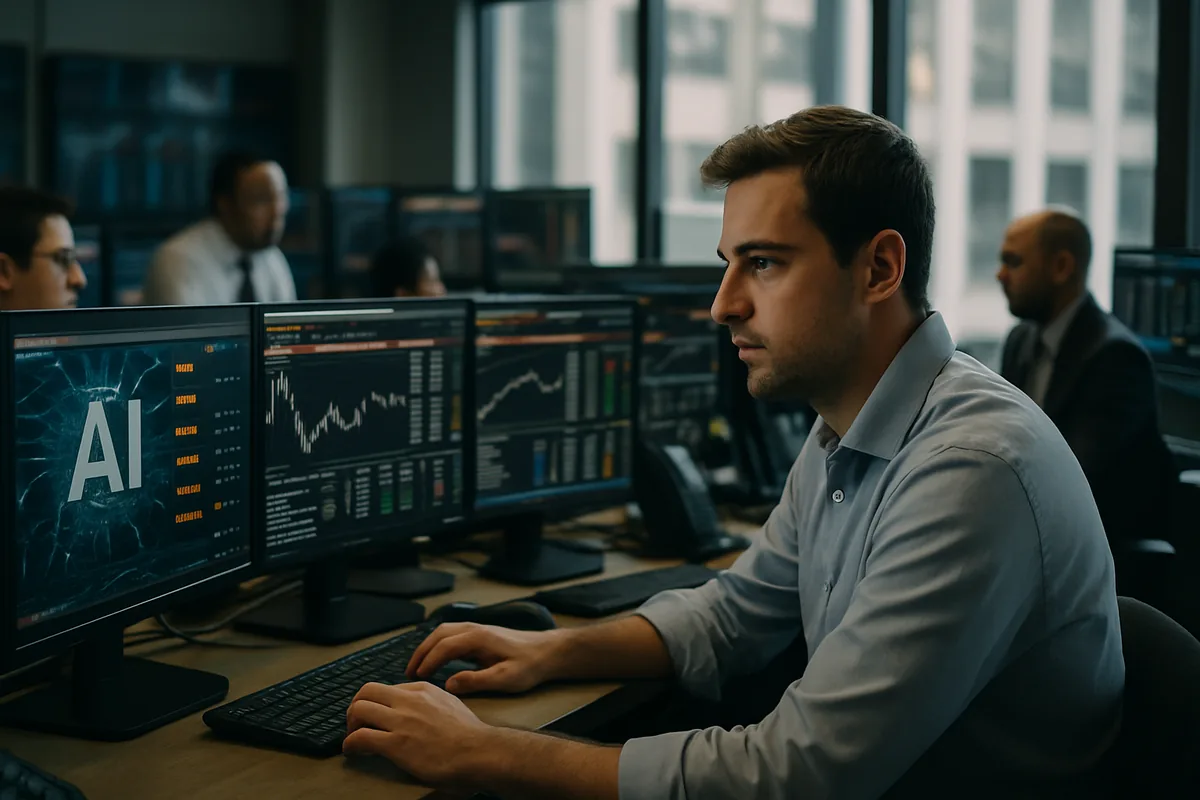
US technology megacaps stretched their market lead this week as investors leaned back into AI-related winners, encouraged by upbeat earnings commentary, fresh capital plans and aggressive shareholder returns — even as strategists and data highlighted growing concentration risk inside major equity benchmarks.
The tone was set by a renewed bid for the largest names by market value after a strong May, when AI demand and earnings optimism helped lift the market capitalization of the world’s biggest companies, according to Reuters. Market participants have increasingly treated AI infrastructure spending — chips, servers, networking and cloud — as the clearest driver of incremental revenue growth, keeping leadership narrowly focused on a small group of tech and semiconductor bellwethers.
In company-specific catalysts, Apple in late April flagged strong demand for its flagship iPhone 17 and MacBook Neo and announced a fresh $100 billion share buyback, Reuters reported. That combination of resilient consumer demand signals and capital return has been a recurring support for megacap valuations during the latest leg of the AI trade.
AI spending narrative keeps leadership narrow
The rally’s internal dynamics have been striking: leadership has remained concentrated in mega-cap tech and semiconductor-linked shares, reinforcing the market’s reliance on a relatively small set of companies for index-level gains.
Reuters reported this week that US tech stocks’ market dominance has reached new heights, a development that investors have celebrated during strong upswings but which also presents new risks if expectations slip. The report noted that semiconductors have posted “eye-popping gains,” while other tech areas have also performed strongly. The same story flagged an unusual comparison point — that earnings strength in parts of today’s market can look more robust than what investors saw in the dot-com era — while still warning that heavy index concentration can magnify drawdowns if leadership reverses.
That risk is particularly relevant with AI capex becoming a central macro-style factor for equities. For many institutions, the question is less whether AI demand exists and more whether spending remains broad-based and durable enough to justify the current valuation gap between AI beneficiaries and the rest of the market.
Chips and hardware stay in focus
Several developments kept the semiconductor and hardware complex in focus. Samsung reported an eightfold jump in first-quarter operating profit in April, Reuters said, underscoring the cyclical rebound leveraged to memory and AI-related demand pockets. Reuters also cited optimism tied to Micron, as the company drew favorable analyst commentary in the context of AI-linked memory needs.
Hardware companies also produced outsized post-earnings moves. Business Insider highlighted Hewlett Packard Enterprise’s surge — up 35% in a volatile post-results reaction — as a reminder that positioning in AI infrastructure and guidance language can drive large, rapid repricings during earnings season.
Funding, buybacks and analyst calls shape flows
Beyond quarterly results, the market’s impulse has also been shaped by how tech leaders choose to finance AI ambitions and signal confidence through buybacks.
Barron’s reported that Alphabet is raising $80 billion for AI, a scale that investors interpreted as both a competitive commitment and a signal that the cost of staying at the frontier is rising. The same report suggested other tech giants could follow with similarly large funding plans, reinforcing the idea that balance-sheet capacity is becoming a strategic weapon in the AI arms race.
Meanwhile, Apple’s $100 billion buyback plan — coupled with its product-demand commentary — has been viewed as a stabilizer for the stock amid shifting narratives about its AI positioning heading into its key developer event. CNBC described Apple CEO Tim Cook’s “contrarian AI bet” as facing its biggest test at the company’s WWDC, with investors attentive to whether Apple can translate its approach into a clearer roadmap that satisfies a market increasingly conditioned to expect rapid AI feature rollouts.
Wall Street analyst actions added to cross-currents in single-name flows. CNBC’s running list of the week’s biggest analyst calls included frequent mentions of AI bellwethers such as Nvidia, Apple, Micron and Meta, a pattern that has helped keep attention — and incremental flows — pinned to the same leadership cohort.
Concentration risk rises as volatility follows earnings
The same force lifting indices — outsized gains in a narrow group — has also increased sensitivity to company-specific surprises. Sharp post-earnings moves have become more common across tech, with guidance commentary on AI monetization, capex and margin durability frequently driving double-digit swings.
CNBC highlighted Palo Alto Networks’ shares jumping more than 10% after earnings, an example of how security spending trends and AI-related product narratives can spark rapid repricing even outside the core chip-and-cloud cluster.
Investors have also had to navigate abrupt pullbacks in heavily owned names. MarketBeat noted Taiwan Semiconductor Manufacturing shares down 6.6% in a recent move, illustrating how quickly risk can be repriced in key AI supply-chain holdings when expectations, positioning, or broader market volatility shifts.
What markets are watching next
With earnings season fading and summer macro catalysts ahead, market participants are monitoring three near-term drivers:
- Corporate AI capex signals: Any evidence that cloud and enterprise customers are slowing or reprioritizing AI spend could quickly ripple through semiconductors, servers and networking.
- Financing and capital return: Large funding plans like Alphabet’s and major buybacks like Apple’s remain central to the equity story, affecting both valuation support and perceptions of confidence.
- Event risk and narrative shifts: Product and platform events — including Apple’s WWDC — can influence how investors rank AI winners and laggards, particularly when market breadth is narrow.
For now, the AI-led rally remains intact, but the dominance of a handful of stocks means that incremental news — a single funding plan, guidance line item, or analyst pivot — can have an outsized influence on broader benchmarks, especially if macro conditions tighten or expectations for AI monetization slip.
References & Links
- Reuters on AI demand and May market-cap gains: Reuters
- Reuters on market dominance risks in US tech: Reuters
- Barron’s on Alphabet’s $80 billion AI raise: Barron’s
- CNBC on Apple and WWDC as an AI bet test: CNBC
- Business Insider on HPE’s 35% surge post-earnings: Business Insider
- MarketBeat on TSMC down 6.6%: MarketBeat
- CNBC roundup of analyst calls: CNBC
- CNBC on Palo Alto earnings move more than 10%: CNBC
This is market commentary based on publicly available news sources. Not financial advice.